Hack your Research! @ ICOP 2026
By Marco
Event Date: Monday, June 15th, 2026, 6:30pm to 8pm, CEST
Event Location: Sala “San Basilio,” Luigi Zordan Congress Center, University of L’Aquila, Italy
Link: ICOP 2026 - special events
Organizer:
Giammarco Di Sciullo, Università degli Studi dell’Aquila, Italy
Advisory Committee:
Rekha Yadav, University College London, United Kingdom
Besma Kalla, Eindhoven University of Technology, Netherlands
Vincent van Vliet, Eindhoven University of Technology, Netherlands
Amol Delmade, Pilot Photonics, Ireland
Marco Eppenberger, PsiQuantum, USA
Menno van den Hout, Eindhoven University of Technology, Netherlands
Henrique Buglia, University College London, United Kingdom
Nicolas Fontaine, Nokia Bell Labs, USA
Roland Ryf, Nokia Bell Labs, USA
Jochen Schroeder, Chalmers University of Technology, Sweden
Demos:
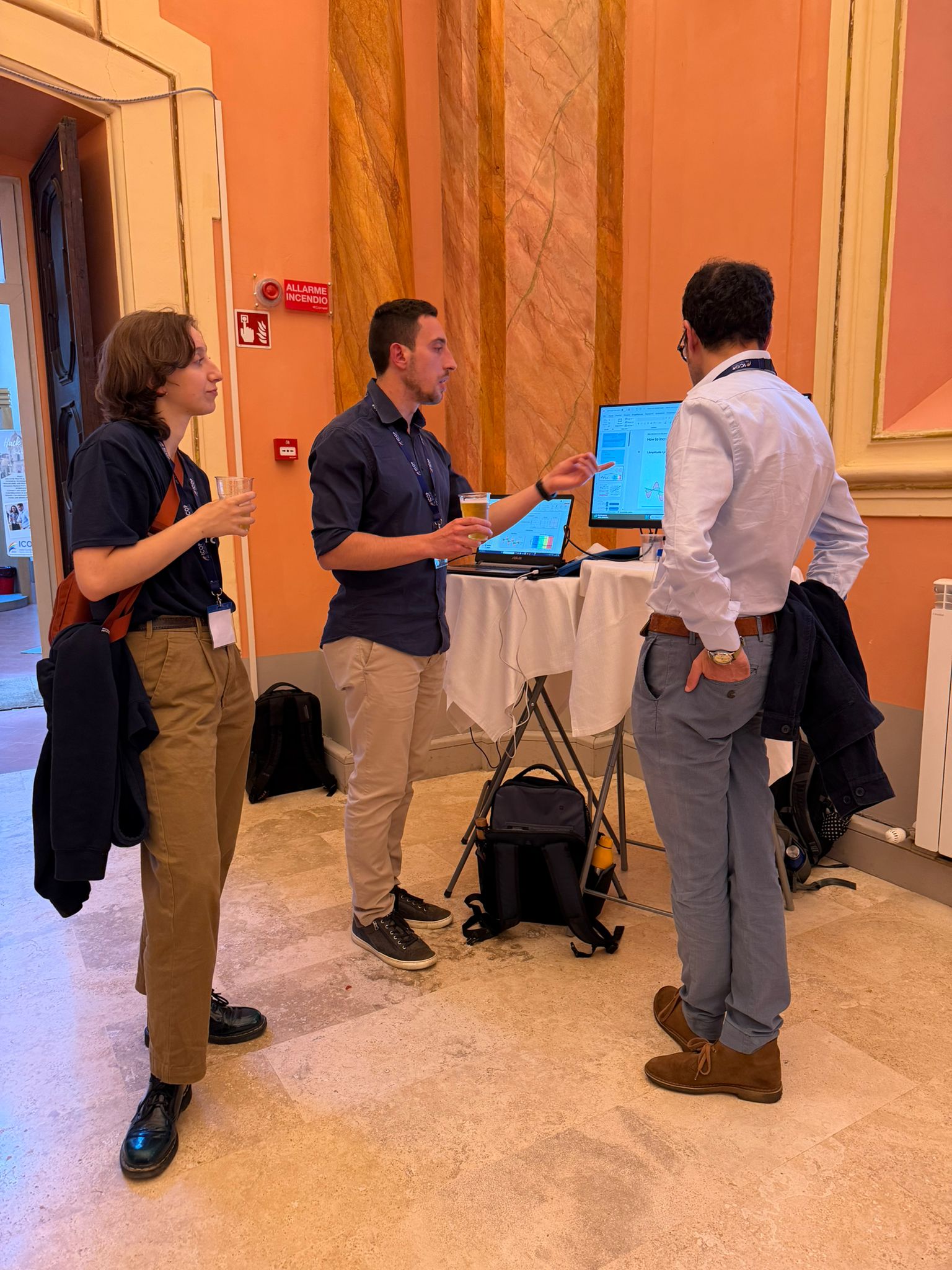
LabVIEW and MATLAB in Optical Transmission Lab for Coherent DSP, it is the Dream Team?
by Robert Emmerich, Fraunhofer HHI, Germany
The advent of open source has led to a decline in the use of proprietary software environments, such as the graphical programming language LabVIEW and MATLAB. In this demonstration, we will present offline experiments from our Berlin laboratory using our MATLAB-based coherent transport DSP in conjunction with a LabVIEW-based GUI foron the fly configuration and DSP control.
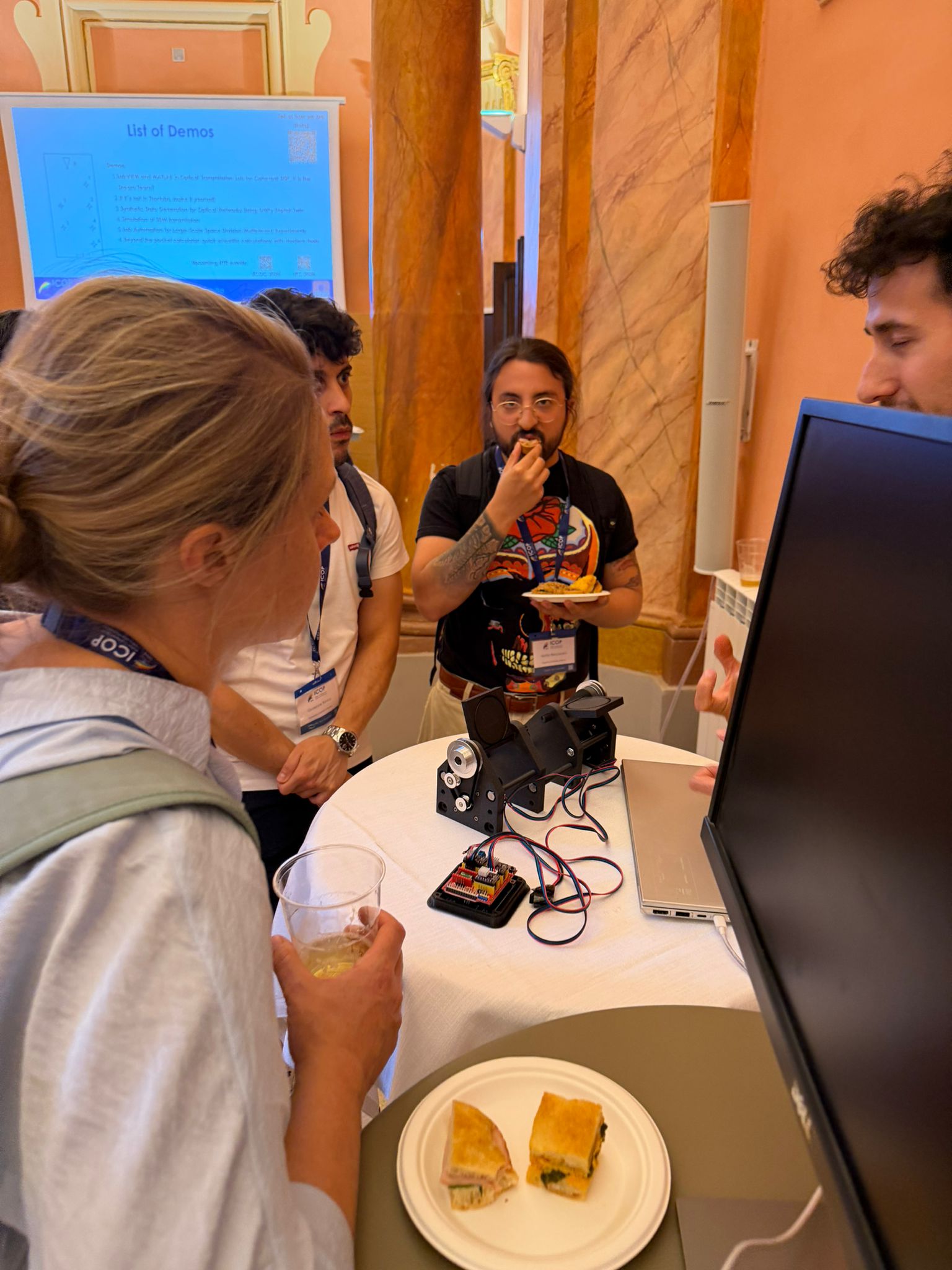
If it´s not in Thorlabs, make it yourself!
by Iñaki Beraza, DTU, Denmark
This is the story how we could not find a product in the market, an automatized polarization controller or certain size. And how we decided to 3D print it and program it by ourselfs. It end up being way cheaper!!
Synthetic Data Generation for Optical Networks Using GNPy Digital Twin
by Renato Ambrosone, Politecnico di Torino, Italy
Machine learning in optical networks is often limited by scarce or incomplete datasets. We show how GNPy can be used as a digital twin to generate physically consistent synthetic data across a wide range of operating conditions and what-if scenarios. This approach enables the creation of datasets for training and validating ML models, including rare or extreme cases that are difficult to observe in real networks, improving robustness and accelerating experimentation.
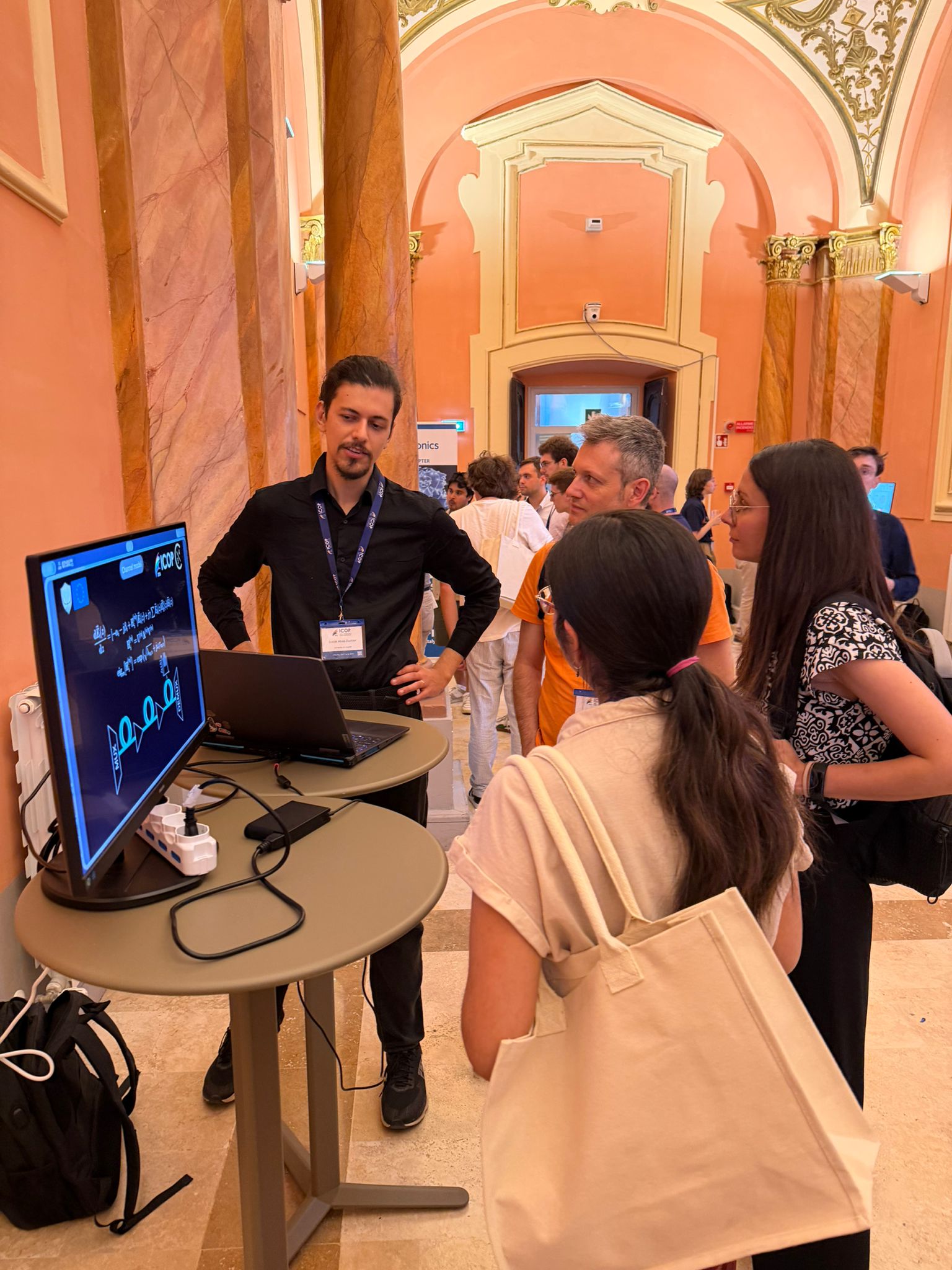
Simulation of SDM transmission
by Lucas Alves Zischler, Univaq, Italy
With the growing interest in space-division multiplexing (SDM) transmission, simulations can provide quick estimates and offer insight into the underlying effects before or during experimental work. In this demo, I present an end-to-end simulation of an SDM transmission system, from symbol modulation at the transmitter through the coupled SDM fiber channel, accounting for non-linear effects and random modal coupling, to multiple-input multiple-output (MIMO) filtering at the receiver.
Lab Automation for Large-Scale Space Division Multiplexed Experiments
by Stefano Gaiani, Politecnico di Milano, Italy
We demonstrate how automating measurements can reduce time and simplify the implementation of large-scale experiments involving space-division multiplexed fibers.
Beyond the Pocket Calculator: Quick Scientific Calculations with Modern Tools
by Francesco Lorenzi, Università di Padova, Italy
Pocket calculators replaced the slide rule in the 1970s, as they gave higher-precision answers at the press of a button. They became the natural companion for quick technical calculations, serving generations of scientists and engineers, up to the present day. However, everyday scientific calculations increasingly benefit from tools that keep the immediacy of a calculator while adding physical-unit checking, step-by-step saving, access to a wider range of physical constants, and interoperability with larger codebases. This demo explores modern interactive calculation environments as upgraded pocket calculators. We will focus on tools such as Numbat, together with selected features of the Julia and Python programming languages.
Photos: